

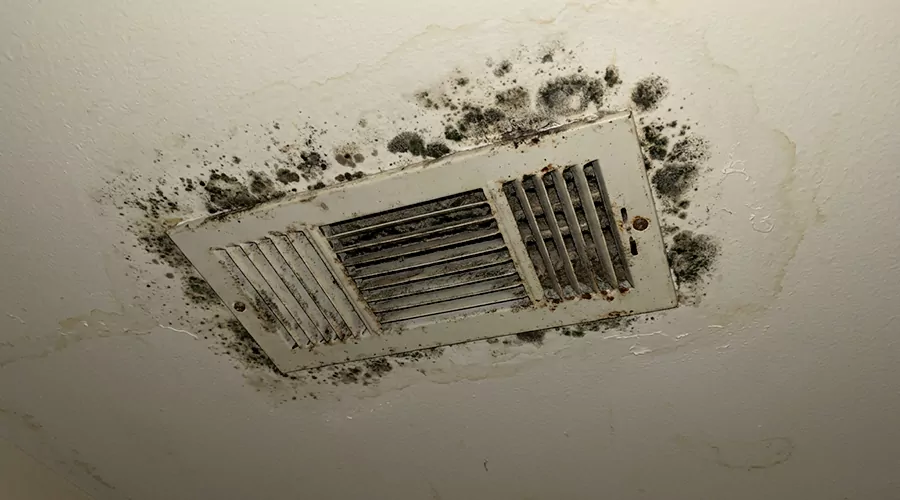
Mold in AC vents develops when moisture remains on vent surfaces or inside nearby ductwork long enough for fungal growth to begin. Condensation from cold air conditioning components is a common moisture source. High indoor humidity and water leaks can increase the risk. Mold can begin growing on damp materials within 24 to 48 hours under suitable conditions.
Air conditioners remove heat and moisture from indoor air. However, the cooling process also creates cold surfaces where condensation can develop. When excess moisture reaches vent covers or surrounding duct materials, it can support mold growth if dust and other nutrients are present.
Understanding the cause is important because cleaning the visible material does not necessarily correct the problem. Mold may return when the same surface continues getting wet. Identifying the moisture source helps determine whether ordinary surface cleaning is appropriate or whether the HVAC system needs further assessment.
What Are the Main Causes of Mold in AC Vents?
Mold develops around AC vents when moisture combines with suitable nutrients on a surface that remains damp. Condensation is a common cause, but leaking duct connections and drainage problems can also introduce water. The affected material and duration of moisture exposure determine how extensive the contamination becomes. Our HVAC mold remediation team addresses both the contamination and the underlying moisture source.
Condensation Around Cold Supply Vents
Condensation occurs when warm humid air contacts a surface colder than the air's dew point. During cooling operation, metal supply grilles can become cold enough for water droplets to form. Moisture may collect around the grille edges and spread onto nearby ceiling paint or drywall.
Repeated condensation keeps the surrounding surface damp and allows ordinary dust deposits to retain moisture. This creates conditions where mold can develop if suitable nutrients are available. A ceiling vent that repeatedly develops water droplets during cooling may have a humidity or insulation problem that needs attention.
High Indoor Humidity
High indoor humidity increases the likelihood of condensation on cold AC components. When indoor air contains excess moisture, cold surfaces can reach the dew point more easily. Bathrooms and poorly ventilated rooms may experience this problem more frequently because everyday activities add water vapor to the air.
The Environmental Protection Agency recommends keeping indoor relative humidity ideally between 30% and 50% when practical. A digital hygrometer can help identify periods of excessive humidity. If readings remain above this range, managing the moisture source becomes an important part of preventing recurring mold.
Clogged Condensate Drain Lines
Air conditioners naturally remove moisture as indoor air passes over the evaporator coil. The collected water should flow into a drain pan and leave through the condensate drain line. When the drain becomes obstructed, water can accumulate around the cooling equipment instead of draining properly.
Standing water creates damp conditions near internal HVAC components. If surrounding insulation or accumulated debris remains wet, microbial growth can develop. A blocked drain does not automatically mean every supply duct contains mold, but it can create conditions that increase contamination risk near the air handler.
Damaged or Missing Duct Insulation
Supply ducts carry cooled air through spaces that may be much warmer than the air inside the duct. Proper insulation reduces the chance of condensation when humid air contacts these colder surfaces. When insulation becomes damaged or separates from a connection, moisture can develop around the exposed duct material.
This problem is common in situations where ductwork passes through an unconditioned attic or crawlspace. Water may collect around a poorly insulated section and eventually affect nearby building materials. Repeated moisture exposure can create conditions that support mold around the vent opening or inside damaged insulation.
Air Leaks Around Duct Connections
Damaged duct connections can allow unwanted air to enter or escape from the system. Return-side leaks may draw humid air from attics or other unconditioned spaces. Supply-side openings can also expose cold surfaces to surrounding air under certain conditions.
Air leakage alone does not cause mold because sufficient moisture must still be present. However, it can contribute to condensation and introduce airborne particles that settle on duct surfaces. Correcting damaged connections helps address the conditions that may support recurring growth.
Water Damage Near AC Vents
Water entering through a roof leak or plumbing problem can affect ductwork even when the air conditioner operates normally. Moisture may reach the duct boot or surrounding drywall before becoming visible around the grille. Hidden insulation can remain damp after the initial leak has stopped.
A stain that develops when the AC system is not operating may suggest water intrusion rather than cooling-related condensation. The location and timing of the moisture provide useful clues. Repairing the original leak is necessary before contaminated materials can be restored.
Where Does Mold Usually Develop in an AC Vent System?
Mold can develop on several AC components when moisture remains present. Areas near the cooling coil are particularly vulnerable because condensation is part of normal air conditioning operation. However, mold may also develop on cold vent covers or on surrounding building materials affected by moisture.
| Location | Possible Moisture Source | What May Happen |
|---|---|---|
| Ceiling supply grille | Condensation on cold metal | Surface growth or staining around edges |
| Supply duct interior | Moisture entering through damaged connections | Contamination on damp deposits |
| Evaporator coil area | Cooling condensation | Growth on accumulated debris |
| Condensate drain pan | Standing water from poor drainage | Persistent damp conditions |
| Duct insulation | Condensation or water intrusion | Contamination within porous material |
| Drywall around vent | Condensation or roof leak | Growth on moisture-damaged surfaces |
The location matters because different materials require different cleaning methods. Bare metal surfaces can sometimes be cleaned when mold is confirmed and the moisture source is corrected. Internally insulated duct sections may need replacement if the insulation becomes wet or moldy.
The visible grille does not necessarily show the condition of the entire duct system. A small stain around one vent may be caused by localized condensation rather than widespread contamination. Identifying the affected material prevents unnecessary cleaning of unaffected components.
How Can You Tell if There Is Mold in Your AC Vents?
Suspected mold may appear as irregular dark patches or become noticeable through a persistent musty odor during cooling operation. However, neither appearance nor smell alone confirms the source of contamination. Household dust and airborne soot can produce similar discoloration around AC openings.
Moisture provides a more useful clue because mold cannot grow without water. A vent that repeatedly develops condensation deserves investigation even when the visible stain is small. Comparing the affected opening with nearby vents can help determine whether the problem is localized.
Common Warning Signs
Watch for these 10 warning signs when examining AC vents:
- Irregular dark or discolored patches appear on damp grille surfaces.
- A musty odor repeatedly develops when cooling begins.
- Water droplets form along the edges of a supply vent.
- Dark staining returns after the cover has been cleaned.
- Paint begins peeling around a ceiling opening.
- Nearby drywall develops water stains or swelling.
- Visible deposits appear inside an accessible duct opening.
- Condensate water accumulates near the cooling equipment.
- Insulation around accessible ductwork appears wet.
- Similar moisture-related staining develops around multiple vents.
These signs can indicate different underlying conditions. For example, peeling paint may result from repeated condensation without confirmed fungal growth. A dark deposit inside the duct may also be ordinary dust rather than mold.
If substantial contamination is suspected, avoid brushing or scraping the material for identification. Disturbing deposits can release particles into the surrounding air and may damage internal duct insulation.
How Quickly Can Mold Develop Around AC Vents?
Mold may begin growing on damp materials within 24 to 48 hours when conditions are suitable. However, visible growth does not appear on a fixed schedule in every home. The affected material and how long it remains wet influence the rate of development.
A metal grille that becomes briefly damp and dries completely is different from a drywall surface that remains wet after repeated cooling cycles. Porous materials can retain moisture beneath the visible surface. This can allow contamination to continue even when the surrounding area appears dry.
| Moisture Condition | Possible Development | Recommended Action |
|---|---|---|
| Brief condensation | Temporary water droplets | Dry the surface and monitor |
| Repeated dampness | Dust adheres to the grille | Investigate humidity and insulation |
| Moisture lasting 24 to 48 hours | Mold growth becomes possible | Correct the source promptly |
| Long-term wet drywall | Material deterioration and possible growth | Assess the affected material |
| Continuing water intrusion | Contamination may recur after cleaning | Repair the leak and dry affected areas |
This progression describes possible outcomes rather than a guaranteed sequence. Mold does not automatically spread throughout the HVAC system because one grille becomes damp. However, unresolved moisture can increase the amount of material affected over time.
How Can You Check for Moisture Around AC Vents?
A basic moisture inspection can help identify whether condensation or water intrusion is contributing to suspected mold. The inspection should focus on observing accessible surfaces without disturbing deposits inside the duct system. A hygrometer and flashlight are useful tools for this initial check.
Begin by examining the vent while the air conditioner is off. Check for existing water stains and note whether the nearby paint appears damaged. Next, measure the room's relative humidity and record whether condensation develops during normal cooling operation.
Follow these steps:
- Photograph the affected vent: Record the visible stain and surrounding surface condition.
- Measure indoor humidity: Use a digital hygrometer to identify unusually damp conditions.
- Look for condensation: Check whether water droplets develop during cooling operation.
- Inspect nearby surfaces: Look for peeling paint or water damage around the opening.
- Compare other vents: Determine whether similar staining affects multiple rooms.
- Record the pattern: Note whether moisture appears only during cooling or remains present when the system is off.
If the HVAC system itself is known or credibly suspected to contain mold, stop operating it until the condition has been assessed. Running a contaminated system may distribute material through the building. Avoid opening sealed equipment panels or removing internal insulation during a household inspection.
Can Mold in AC Vents Be Cleaned Without Replacing the Ducts?
Some confirmed mold contamination can be removed from sound hard duct surfaces, but the correct method depends on the affected material. Bare sheet metal generally provides a surface that can be cleaned when the contamination is accessible. Porous insulation presents a different problem because growth can develop within its structure.
Wet or moldy fiberglass duct material cannot be effectively restored through ordinary cleaning and generally requires replacement. Applying chemical sprays does not reliably remove contamination embedded in the insulation. Any replacement must also address the moisture source that caused the material to become wet.
A small isolated spot on an exterior washable grille may be suitable for careful surface cleaning when there is no evidence of internal system contamination. Use an appropriate detergent and dry the material completely. If growth extends into the duct or onto damaged drywall, household cleaning alone is not an adequate response.
How Much Does Mold in AC Vents Cost to Fix in 2026?
The cost of addressing mold in AC vents depends on whether the problem involves an exterior surface or contamination inside the HVAC system. A small washable grille may require only basic cleaning, while moldy insulation or damaged mechanical components can require extensive work. Correcting the moisture source may add repair costs.
The following are broad U.S. cost benchmarks reported for 2026. They represent different project scopes rather than expenses that every affected vent will require.
| Condition | Typical Work | Estimated 2026 Cost |
|---|---|---|
| Minor growth limited to a washable exterior cover | Suitable surface cleaning | Basic cleaning supplies |
| Localized mold inside ductwork | Duct mold remediation | $600 to $2,000 |
| Contamination affecting the HVAC system | More extensive remediation | $3,000 to $10,000 |
| Wet or moldy internal duct insulation | Remove and replace affected sections | Requires a section-specific estimate |
A small stain on an exterior grille does not establish that a complete HVAC remediation project is necessary. The scope should follow the documented condition of the system. Repeatedly cleaning the visible stain without correcting condensation can result in additional work later.
When Should You Call an HVAC Professional?
Professional evaluation is appropriate when suspected mold appears inside AC ductwork or around internal cooling components. Persistent drainage problems and contaminated duct insulation also require attention. These conditions involve concealed materials that cannot be adequately assessed through ordinary surface cleaning.
A qualified HVAC technician can examine the condensate drainage system and check for damaged duct insulation. When growth is extensive or affects porous materials, a mold remediation specialist may be needed to determine which components require removal. The assessment should identify the affected areas and the original moisture source.
Cleaning methods should match the material involved. Bare metal ducts may be cleaned when appropriate, while moldy fiberglass insulation generally requires replacement. A proposal that relies only on spraying chemicals into the system does not address contaminated porous materials or ongoing moisture.
How Can You Prevent Mold From Returning to AC Vents?
Preventing mold around AC vents requires controlling moisture before it accumulates on surfaces. Proper condensate drainage helps remove water produced during cooling, while suitable insulation reduces unwanted condensation. Regular filter maintenance supports equipment operation but cannot replace moisture control.
Keep Indoor Humidity Under Control
Monitor indoor relative humidity with a hygrometer and aim for approximately 30% to 50% when practical. Use bathroom exhaust ventilation during showers and manage other activities that release moisture indoors. If humidity remains elevated during cooling operation, investigate why the home is not removing enough moisture.
Maintain Condensate Drainage
Check accessible cooling equipment for standing water or signs of overflow. The condensate drain must remove moisture collected during normal air conditioning operation. A blocked or damaged drainage component should be corrected before water reaches surrounding insulation or building materials.
Protect Duct Insulation
Inspect accessible duct connections for damaged insulation or recurring condensation. Ducts in unconditioned spaces need insulation appropriate for their environment. Exposed cold surfaces can repeatedly attract moisture when humid air reaches them, so correcting insulation problems helps prevent future dampness.
Replace Air Filters as Recommended
Inspect the HVAC filter approximately every month during heavy cooling use and replace it according to the manufacturer's instructions. Make sure the filter fits properly because gaps can allow particles to bypass the material. Although filtration helps control dust, preventing mold still depends primarily on keeping the system dry.
Conclusion
Mold in AC vents develops when moisture remains on surfaces long enough to support fungal growth. Condensation and drainage problems are common causes, while damaged insulation can make contamination harder to resolve. Identifying the water source is more important than repeatedly cleaning visible deposits. Significant internal growth may require professional evaluation. This week, inspect your AC vents for condensation and measure indoor humidity.